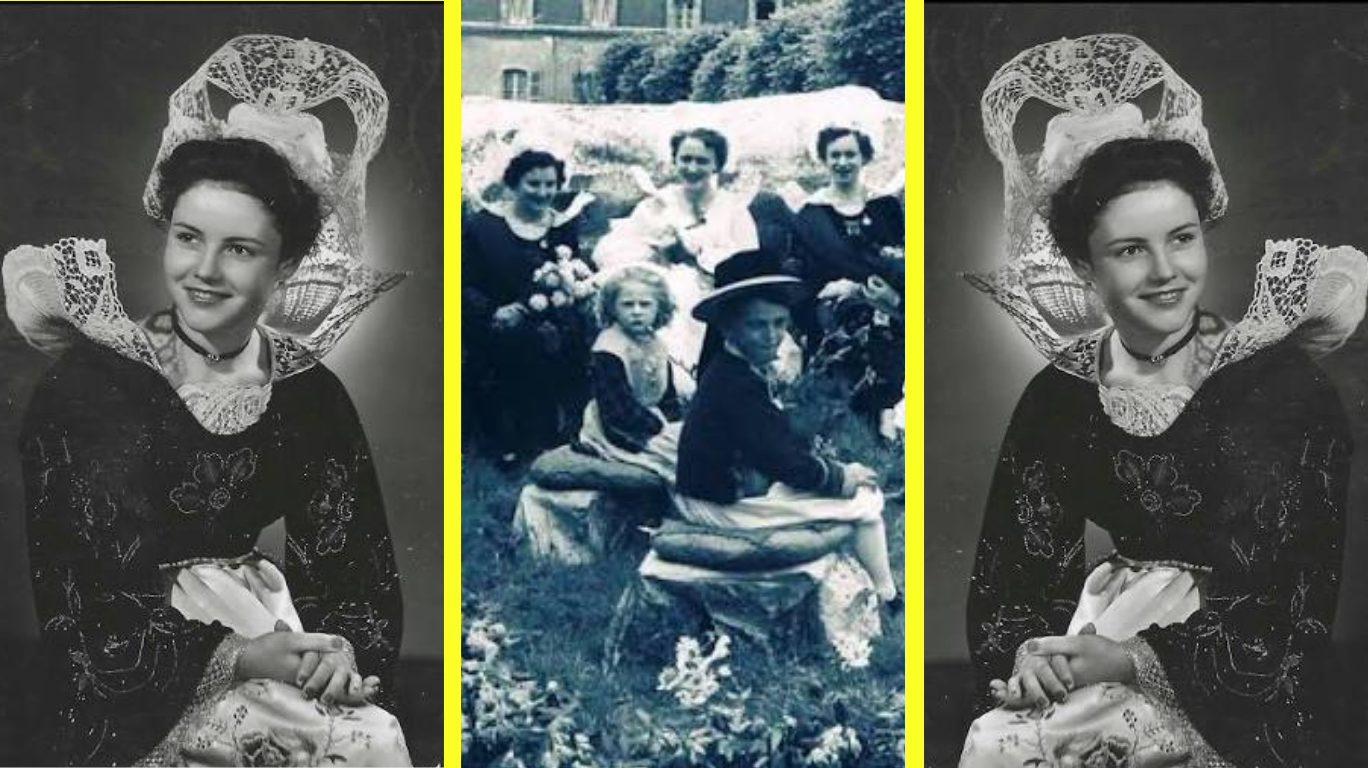
Some names appear in search results not because they belong to famous people, but because the lives behind them carried deep meaning for the people who knew them. Jeannine Belleguic is one such name. She was not a celebrity, a politician, or a public figure in the modern sense of the word. She was a French woman, born Jeannine Bleuzen, who lived nearly a full century rooted in the quiet dignity of family life, Breton tradition, and community in Quimperlé, Finistère.
You may also see her name written as Jeannine Belléguic, which is simply the formally accented French spelling of the same surname. In genealogy records and obituary databases, she also appears under her birth name, Jeannine Bleuzen, which is the name she carried before her marriage. All three versions refer to the same woman.
Jeannine Belleguic passed away on Friday, 18 April 2025, at the age of 93. Her death was announced through obituary notices published on the Cybille memorial platform and in Ouest-France, two of the most widely read sources for French death notices. It is these notices, indexed by search engines, that have brought her name to the attention of readers across the internet. Her story is not one of glamour or public achievement. It is a story of love, family, faith, and the kind of deep local belonging that defines life in Brittany.
Who Was Jeannine Belleguic? A Quick Overview
Jeannine Belleguic was born Jeannine Bleuzen, a name that places her clearly within Breton family heritage. After her marriage, she became known as Jeannine Belleguic, and in the formal French tradition of obituary writing, she was referred to as Madame Jean-Charles Belleguic, née Jeannine Bleuzen. This naming convention, still common in France, acknowledges both the woman’s own identity and her role within her married family.
She was French by nationality, Breton by identity, and Quimperloise by home. Quimperlé, a small but historically rich town in the Finistère department of Brittany, western France, was the centre of her world for decades. She did not hold a public office, appear on television, or build a professional profile that would follow her beyond her own community. Her life was lived within the structures that mattered most to her: her husband, her children, her grandchildren, and the town she called home.
The reason her name appears in online searches today is simply this: modern obituary platforms publish death notices that are indexed by search engines. When readers come across these notices and search for more information, a name like Jeannine Belleguic begins to generate traffic. That traffic should be met with accuracy and respect, which is exactly what her story deserves.
Early Life and Birth Name — Jeannine Bleuzen
Jeannine Belleguic was born Jeannine Bleuzen, and this maiden name is an important part of understanding who she was. The Bleuzen surname is distinctly Breton in character, rooted in the linguistic and cultural landscape of western France. Families bearing this name have long been connected to the communities, parishes, and rural life of Brittany, a region that has always maintained a strong sense of its own identity even within the broader context of France.
She was born in the early decades of the twentieth century, most likely in 1931 or 1932 — a date calculated from her confirmed age of 93 at the time of her death in April 2025. No exact birth date has been confirmed in the publicly available obituary records, but this approximate year places her clearly within the generation of French women who grew up between the two World Wars. Her generation lived through the Second World War, through the rebuilding of France in the postwar years, through the social changes of the 1960s and beyond, and through the transformation of French life over the latter half of the century. To live 93 years across that span of history is to have witnessed the country change in ways that earlier generations could not have imagined.
Jeannine grew up within a sizeable family. Her siblings included Simone Félicie Bleuzen, who lived from 1921 to 2016, and Cécile Blanche Ernestine Bleuzen, who also lived from 1924 to 2016. She had a brother, Jean Claude Georges Bleuzen, and a sister Yvette Bleuzen, who is also known in family records as Yvette Ollivier. These names, preserved in genealogy databases and family trees on platforms such as Geneanet, give a sense of the wider Bleuzen family circle in which Jeannine spent her early years.
In French genealogy, maiden names carry a great deal of weight. They serve as the primary link between a woman’s life before and after marriage, connecting her to the family she was born into and helping researchers trace ancestry across generations. For Jeannine, the name Bleuzen is that link — a thread connecting her to Breton soil and Breton family history long before she became Madame Belleguic.
Marriage to Jean-Charles Belleguic and Life in Quimperlé
The marriage of Jeannine Bleuzen to Jean-Charles Belleguic is the event that gave her the name by which she is most widely known today. Jean-Charles Belleguic was born on 31 March 1924 in Quimperlé, Finistère, and he was a man with a significant presence in the local professional and social life of his town.
Jean-Charles served as the Financial Director of Papeteries de Mauduit, a paper mill company based in the Quimperlé area. In a town of Quimperlé’s size, a role like this carried real weight. Paper manufacturing was a meaningful part of the local industrial economy, and the Financial Director of such a company occupied a position of responsibility and community standing. His work connected the Belleguic family name to the working identity of the town in a concrete and lasting way.
Jean-Charles Belleguic died on 24 June 1979, at the age of 55. His death came relatively early, leaving Jeannine as a widow for the remaining decades of her long life. She outlived her husband by more than forty-five years, a span of time that speaks to both her longevity and her resilience. Through those years, she continued to be known by her married name, and her identity as Madame Jean-Charles Belleguic remained part of how the family and community understood and remembered her.
Life in Quimperlé as Madame Belleguic meant life rooted in a particular kind of French provincial existence. Quimperlé is a town with medieval architecture, a river running through its centre, and a strong Catholic and Breton cultural tradition. It is a place where family names are known across generations, where local festivals carry genuine meaning, and where the memory of community members is kept alive through the structures of parish, family, and neighbourhood. For Jeannine, this was not a backdrop. It was home.
Jeannine Belleguic’s Age and Personal Details
One of the most searched details connected to Jeannine Belleguic’s name is her age. This is common when obituary notices generate search interest — readers want to confirm the basic facts, and age is often the first thing they look for.
The answer, confirmed by the obituary notices published in April 2025, is clear: Jeannine Belleguic was 93 years old at the time of her death. She died on Friday, 18 April 2025, in Quimperlé. The Ouest-France obituary notice, one of the most reliable sources for French death records, confirms this figure directly.
It is worth noting, for the sake of accuracy, that French public archives contain records for more than one person associated with the name Jeannine Belleguic. The Libra Memoria database includes a notice for a different Madame Jeannine Belleguic who died on 12 June 1987 at the age of 46, with the notice connected to Bordeaux and Férolles-Attilly. This is an entirely separate individual. The two records should not be conflated. When readers search for information about Jeannine Belleguic in connection with Quimperlé, Brittany, and 2025, the relevant record is unambiguously the one describing the 93-year-old woman who died on 18 April 2025.
The spelling of her name also varies across sources, and this can cause confusion for those researching her online. Belleguic and Belléguic are the same surname, with and without the formal accent. Bleuzen is her birth name. All three appear in legitimate records connected to the same woman, and readers searching under any of these variants are likely looking for the same person.
Ninety-three years is a remarkable span of life. It covers the final decades of the French Third Republic, the entirety of the Second World War, the postwar reconstruction, the social revolution of the 1960s, the rise of digital technology, and the shifting shape of French society across the twenty-first century. Jeannine Belleguic lived through all of it, and she did so from the same corner of Brittany where she had always been rooted.
Jeannine Belleguic’s Children and Family
At the heart of Jeannine Belleguic’s identity was her role as a mother. She and Jean-Charles Belleguic had three children, and it is through those children that her legacy continues most directly.
Their first son, Gilles Belleguic, is connected to the family genealogy records that preserve the Bleuzen and Belleguic family tree on Geneanet. His name appears in the obituary notice alongside his wife, Evelyne, and in family tree documentation linking the Belleguic line to the wider Bleuzen ancestry. Their second son, Pierre-Yves Belleguic, is mentioned in the family obituary notice alongside his partner Patricia. And their daughter, Catherine, appears in the notice alongside Victor Coulis, her late husband, who is referred to as Victor Coulis (†), indicating that he too had passed away before his mother-in-law.
The presence of these three names in the obituary notice gives a sense of the family Jeannine built across her long life. She did not simply raise children; she became the centre of a family network that extended across generations. Grandchildren and great-grandchildren carry her legacy forward, connected to her not only by blood but by the values, traditions, and memories she passed on over nearly a century.
The connected family surnames in the Belleguic obituary notices tell a broader story of Breton family life. Belleguic, Bleuzen, Coulis, Ollivier — these names appear together in the records, each one representing a family line that intersected with Jeannine’s own. In the tight-knit community of Quimperlé and the surrounding region, these are not just surnames. They are threads in a shared local history, woven together through marriages, friendships, church attendance, and generations of shared life.
Jeannine Belleguic and the Cultural Heritage of Quimperlé, Brittany
To understand Jeannine Belleguic fully, it helps to understand the place she came from and lived in. Quimperlé is a town in the Finistère department of Brittany, western France, situated at the confluence of the Elle and Isole rivers. It is a town with a long and layered history, shaped by medieval Breton culture, Catholic tradition, and a persistent sense of local identity that has survived centuries of political change.
The Belleguic family’s ties to Quimperlé were not incidental. They were generational. Jean-Charles Belleguic was born there, worked there, and died there. Jeannine made it her home for the remainder of her life after their marriage. Their children grew up there. The town was not merely where they lived. It was who they were.
One particularly meaningful connection between Jeannine Belleguic and Quimperlé’s cultural life comes from a tribute preserved on the Facebook page of the Souvenirs des fêtes de Toulfoën, Quimperlé group. The tribute honours Jeanine Bleuzen, Madame Belléguic, as the first Queen of Quimperlé to wear the traditional Breton costume at the Fêtes de Toulfoën, a local cultural festival with deep roots in Breton tradition. This detail, small as it may seem in the broader narrative, is significant. It places Jeannine not just as a resident of Quimperlé, but as someone who represented the town publicly, who carried its traditions on her own shoulders, and who did so in the most visible way possible: by wearing the costume of her people at a community celebration.
Breton identity is not a casual thing. In Brittany, traditional dress, language, music, and festival culture carry the weight of centuries of local pride. The Fêtes de Toulfoën are part of that living heritage, and the role of Queen — the person chosen to embody the town’s identity at such an event — is a meaningful one. The fact that Jeannine was the first to wear the traditional Breton costume in that role speaks to her connection to local culture and her willingness to represent it.
This is the context in which Jeannine Belleguic lived. She was not merely a resident. She was a participant in the life of her community, shaped by its traditions and willing to carry them forward.
Jeannine Belleguic’s Death and Obituary Details
Jeannine Belleguic died on Friday, 18 April 2025, in Quimperlé, Finistère. She was 93 years old. The announcement of her passing was made through the Cybille online memorial platform, in partnership with the Pompes Funèbres du Pays de Quimperlé, the local funeral home that handled the arrangements. An obituary notice was also published in Ouest-France, the regional newspaper that serves as a primary source of public death notices across western France.
The funeral service was held on Friday, 25 April 2025, at 14:30, at the Église Notre-Dame de Quimperlé. Notre-Dame Church is one of the central places of worship in the town, and its selection for Jeannine’s funeral service reflects the family’s connection to the Catholic faith that has long been woven into the fabric of Breton life. Following the religious service, Jeannine was laid to rest at the Saint David Cemetery in Quimperlé, where family members continue to visit and pay their respects.
In the days before the funeral, family and friends were invited to pay their respects at the Salon Mer de la Chambre Funéraire du Pays de Quimperlé, beginning from Wednesday, 23 April 2025. This gathering provided an opportunity for those who loved Jeannine to come together, share their grief, and offer support to her children and grandchildren before the formal ceremony.
The family’s obituary notice was notable for the warmth of its expression. Beyond listing the names of those she left behind, the notice included a particular expression of gratitude from the family to those who had cared for Jeannine in her final years. This kind of acknowledgement is meaningful: it reflects the reality of a long life in which, at some point, care must be received as well as given, and it speaks to the family’s recognition of the people who made Jeannine’s final chapter as dignified and comfortable as possible.
The notice was published from the following family members: Gilles and Evelyne, Catherine and the late Victor Coulis, and Pierre-Yves and Patricia — her children and their partners. The naming of the late Victor Coulis alongside Catherine is a quiet reminder that loss had already visited this family before Jeannine’s own passing.
The Belleguic Family Name — Genealogy and Public Records
The surname Belleguic is distinctly Breton in origin. Like many family names from Brittany, it carries the character of the region’s linguistic heritage, which blends elements of Celtic Breton and French in ways that set Breton surnames apart from those found in other parts of France. The name Belleguic is not common outside of Brittany, which makes it a relatively easy name to trace in genealogy records.
Public genealogy databases, particularly Geneanet, preserve family tree records that connect Jeannine Bleuzen to the Belleguic line. These records are typically maintained by amateur genealogists or family members who have taken an interest in tracing their ancestry. The presence of Jeannine’s birth name, Bleuzen, in these records alongside the Belleguic name allows researchers to follow the family tree in both directions — backward into the Bleuzen ancestry and forward into the Belleguic line through her children.
French public death records also contain entries for other individuals sharing similar names, and it is important to distinguish between them. The most significant source of potential confusion, as noted earlier, is the Libra Memoria entry for a Madame Jeannine Belleguic who died on 12 June 1987 at the age of 46, with the notice linked to Bordeaux and Férolles-Attilly. This is not the same woman as the Jeannine Belléguic née Bleuzen of Quimperlé who died in 2025 at 93. The Deces-en-France public database also lists a Jeannine Le Belleguic, born on 26 March 1927 in Paris and died on 29 March 2020 — again, a separate individual whose name appears similar but whose details do not match. Careful reading of the available records is essential for anyone researching the Belleguic name in French archives.
This kind of name overlap is common in French genealogy, particularly with traditional Breton surnames. It does not make the research impossible; it simply requires attention to detail. For those seeking information specifically about the Jeannine Belleguic of Quimperlé who passed away in 2025, the records to rely on are the Cybille obituary notice, the Ouest-France death announcement, and the Geneanet family tree entries connected to the Bleuzen and Belleguic families of Finistère.
The broader lesson here is one about how digital platforms have changed the visibility of private lives. A death notice published online by a local funeral home can be indexed by a global search engine within hours. The result is that people who lived entirely outside the public eye can suddenly become the subject of search queries from readers who may be anywhere in the world. This does not change who those people were. But it does create a responsibility for those who write about them to do so with accuracy and care.
Why Jeannine Belleguic’s Name Is Trending Online
It is worth pausing to address a question that some readers may have: why is Jeannine Belleguic’s name appearing in search results at all? She was not a celebrity. She did not make headlines during her lifetime. She was a private woman from a small town in Brittany. So what accounts for the search interest?
The answer lies in the way modern obituary platforms work. In France, death notices have traditionally been published in regional newspapers and on printed notices distributed through the local community. In recent years, this practice has moved significantly online. Platforms like Cybille, Libra Memoria, Deces-en-France, and the digital edition of Ouest-France now publish death notices that are publicly accessible on the internet. These notices are indexed by Google and other search engines, which means that a name appearing in a 2025 obituary notice can generate search results within days.
When family members, friends, or community members search for the name of someone they have just heard about — perhaps through word of mouth, a local announcement, or a shared social media post — those searches begin to register as traffic. Search engines interpret rising traffic around a particular query as a signal of relevance, and so the name begins to appear more prominently in results. In some cases, this leads to articles being written to address the search interest, which further increases visibility.
This is fundamentally different from the way a celebrity’s name trends online. When an actor or musician trends, it is usually because of something they have done or said publicly. When a private individual trends, it is usually because of a life event — most often, their death — that has touched a circle of people large enough to generate measurable search activity.
In Jeannine Belleguic’s case, the obituary notice published in April 2025 was the starting point. The notice was shared, read, and searched by people connected to her family, her community, and the wider Quimperlé area. From there, the name entered the search ecosystem, and the interest that followed reflects the genuine human desire to understand and remember a life that has ended.
This is a reminder of something important: in the digital age, every death leaves a public trace. Not because of fame or notoriety, but simply because of the systems we have built to record and share the fact of a person’s passing. Jeannine Belleguic’s name is trending not because she was famous, but because she was loved, and because the people who loved her used the tools available to them to mark her passing.
Conclusion
Jeannine Belleguic was born Jeannine Bleuzen, grew up within a close Breton family, married Jean-Charles Belleguic, and made her home in Quimperlé, Finistère, for the better part of a century. She raised three children, became a grandmother and great-grandmother, participated in the cultural life of her community, and lived with the kind of quiet, rooted dignity that does not attract headlines but leaves a deep impression on everyone who knew her.
She died on 18 April 2025, at the age of 93, and was laid to rest at Saint David Cemetery in Quimperlé, following a funeral service at the Église Notre-Dame. Her family — the Belleguic, Bleuzen, Coulis, and Ollivier lines — mourned her passing and gave expression to their grief and gratitude through a notice that spoke of love, caregiving, and memory.
Her name appears in search results today not because she was famous, but because digital platforms have made all deaths more publicly visible than they once were. What those search results should return is what this article has attempted to provide: an accurate, respectful, and genuinely informative account of who Jeannine Belleguic was, what her life contained, and why her memory matters to those who carry it forward.
She was a daughter, a sister, a wife, a mother, a grandmother, a great-grandmother, and a woman who once wore the traditional Breton costume as the first Queen of Quimperlé to do so at the Fêtes de Toulfoën. That detail, small but vivid, captures something essential about her: she was a woman who belonged to her place, her people, and her time, and she represented them proudly.
May her memory continue to be a source of strength and warmth for everyone she left behind.
Frequently Asked Questions (FAQs)
Q: Who is Jeannine Belleguic? A: Jeannine Belleguic, born Jeannine Bleuzen, was a French woman from Quimperlé, Brittany. She was the wife of Jean-Charles Belleguic and is remembered as a devoted mother, grandmother, and community member. She died on 18 April 2025 at the age of 93. She became the subject of search interest following the publication of her obituary notices on digital platforms.
Q: What was Jeannine Belleguic’s age at the time of death? A: Jeannine Belleguic was 93 years old when she passed away on Friday, 18 April 2025, in Quimperlé, Finistère, France. This figure is confirmed by the obituary notice published in Ouest-France and on the Cybille memorial platform.
Q: What was Jeannine Belleguic’s birth name? A: Her birth name was Jeannine Bleuzen. She took the surname Belleguic after her marriage to Jean-Charles Belleguic. In formal French obituary style, she was referred to as Madame Jean-Charles Belleguic, née Jeannine Bleuzen. The accented spelling Jeannine Belléguic also appears in some records and refers to the same person.
Q: What was Jeannine Belleguic’s approximate birth year? A: Based on her confirmed age of 93 at the time of her death in April 2025, Jeannine Belleguic was born approximately in 1931 or 1932. No exact birth date has been confirmed in the publicly available obituary or genealogy records.
Q: Where was Jeannine Belleguic from? A: She was from Quimperlé, a historic town in Finistère, Brittany, western France. Her life, marriage, and family were all deeply connected to this region. Her husband, Jean-Charles Belleguic, was also a native of Quimperlé.
Q: Who were Jeannine Belleguic’s children? A: Jeannine and Jean-Charles Belleguic had three children: Gilles Belleguic (and his wife Evelyne), Pierre-Yves Belleguic (with partner Patricia), and Catherine (with the late Victor Coulis). All three are named in the family obituary notice published following Jeannine’s death in April 2025.
Q: When and where was Jeannine Belleguic’s funeral? A: Her funeral was held on Friday, 25 April 2025 at 14:30 at the Église Notre-Dame de Quimperlé. She was buried at Saint David Cemetery in Quimperlé. Before the service, family and friends were invited to gather at the Salon Mer de la Chambre Funéraire du Pays de Quimperlé from Wednesday, 23 April 2025.
Q: Who was Jean-Charles Belleguic? A: Jean-Charles Belleguic was Jeannine’s husband. He was born on 31 March 1924 in Quimperlé and served as the Financial Director of Papeteries de Mauduit, a significant local paper mill company. He died on 24 June 1979 at the age of 55, leaving Jeannine a widow for more than four decades.
Q: Is there more than one person named Jeannine Belleguic in public records? A: Yes. French archives contain records for different individuals sharing similar names. A 1987 Libra Memoria record lists a different Jeannine Belleguic who died at age 46 in Bordeaux. A separate entry in Deces-en-France refers to a Jeannine Le Belleguic born in Paris in 1927. The 2025 records relate specifically to Jeannine Belléguic née Bleuzen of Quimperlé, who died at 93. These are separate individuals and should not be confused.
Q: What is Jeannine Belleguic’s connection to the Fêtes de Toulfoën? A: A tribute preserved on a Facebook group dedicated to the Fêtes de Toulfoën in Quimperlé identifies Jeanine Bleuzen, Madame Belléguic, as the first Queen of Quimperlé to wear the traditional Breton costume at this local cultural festival. This honour reflects her connection to Breton heritage and her role in representing the community’s cultural identity at a significant public event.
Q: Why is Jeannine Belleguic being searched online? A: Her name entered search results following the publication of obituary notices on platforms such as Cybille and Ouest-France after her death in April 2025. These notices are indexed by search engines, which means that searches by family members, friends, and community members generate measurable traffic. People searching for her are typically looking for accurate information about her life, her family, or the details of her passing.
Read More Blog:
visite bulk viewer
Who Is Stuart Claxton?
Who Is Edward Cullen?